
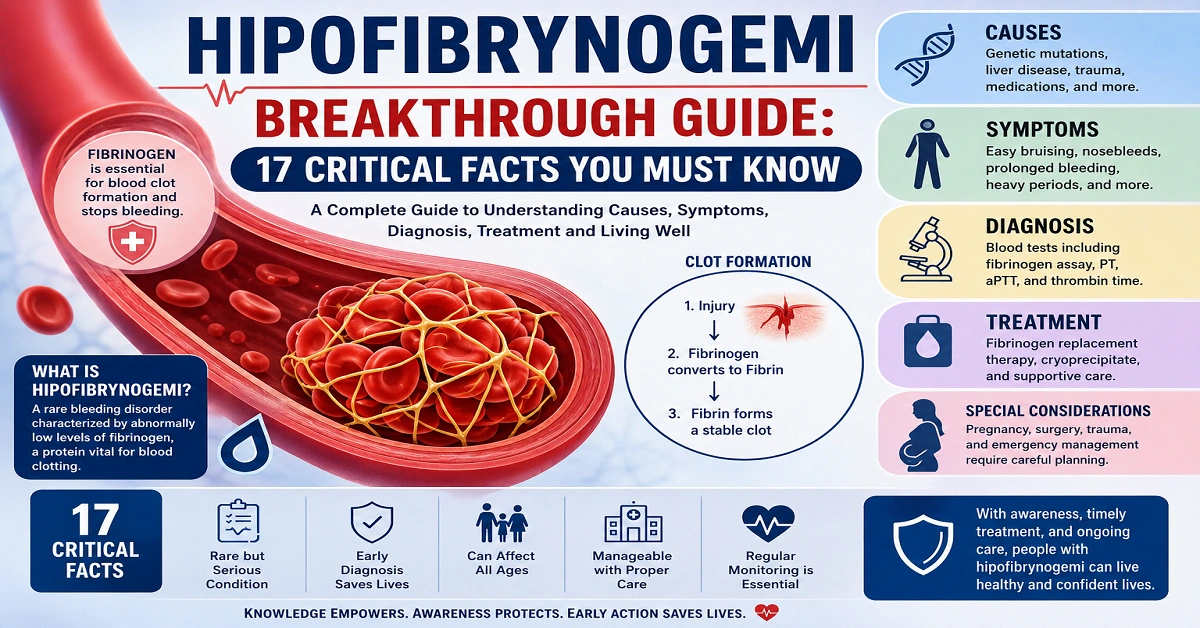
Hipofibrynogemi is a rare blood disorder where the body has unusually low levels of fibrinogen, a protein essential for blood clot formation. Without enough fibrinogen, the blood struggles to clot properly, which may lead to prolonged bleeding after injuries, surgery, or even spontaneously.
In simple terms, hipofibrynogemi interferes with the body’s natural “bandage system.” Normally, when you cut yourself, your body quickly forms a clot to stop the bleeding. However, with hipofibrynogemi, this process becomes slow and inefficient.
This condition can be inherited or acquired later in life due to other health problems. Though rare, hipofibrynogemi is serious and needs medical attention because even minor injuries can become dangerous.
The Role of Fibrinogen in the Human Body
Fibrinogen is a protein produced by the liver and released into the bloodstream. It plays a central role in the clotting cascade, which is the step-by-step process that stops bleeding.
When bleeding starts:
- Platelets rush to the site.
- Fibrinogen converts into fibrin.
- Fibrin forms a mesh that stabilizes the clot.
Without enough fibrinogen, this mesh is weak or absent. That’s why hipofibrynogemi leads to unstable clots and prolonged bleeding.
For authoritative background on clotting disorders, see:
World Health Organization – Blood Disorders Overview
Types of Hipofibrynogemi
Hipofibrynogemi is classified into two major types:
Congenital Hipofibrynogemi
Present from birth due to genetic mutations affecting fibrinogen production.
Acquired Hipofibrynogemi
Develops later due to:
- Liver disease
- Severe infections
- Trauma
- Certain medications
Understanding which type a patient has is crucial for treatment planning.
Causes and Risk Factors
Genetic Causes
Some people inherit mutations in the genes responsible for fibrinogen production. These individuals may not show symptoms until later in life.
Acquired Causes
Hipofibrynogemi may result from:
- Liver failure
- Massive blood loss
- Cancer
- Disseminated intravascular coagulation (DIC)
Common Symptoms of Hipofibrynogemi
Symptoms vary but often include:
- Frequent nosebleeds
- Easy bruising
- Prolonged bleeding from cuts
- Heavy menstrual bleeding
- Bleeding after dental work
- Internal bleeding in severe cases
Some people live years without knowing they have hipofibrynogemi until a major event reveals it.
How Hipofibrynogemi Is Diagnosed
Doctors rely on specialized blood tests to diagnose hipofibrynogemi.
Blood Tests Used
| Test | Purpose |
|---|---|
| Fibrinogen Assay | Measures fibrinogen level |
| PT (Prothrombin Time) | Clotting efficiency |
| aPTT | Clotting pathway analysis |
| Thrombin Time | Fibrin formation check |
Low fibrinogen levels confirm hipofibrynogemi.
Complications Associated with Hipofibrynogemi
Without treatment, hipofibrynogemi may lead to:
- Internal hemorrhage
- Surgical complications
- Brain bleeding (rare but severe)
- Miscarriage risks
- Joint bleeding
Treatment Options for Hipofibrynogemi
Treatment focuses on replacing missing fibrinogen.
- Cryoprecipitate transfusion
- Fibrinogen concentrate therapy
- Plasma transfusion
Emergency Management
During surgery, childbirth, or trauma, immediate fibrinogen replacement is essential.
Living with Hipofibrynogemi
People with hipofibrynogemi can live normal lives with precautions:
- Avoid contact sports
- Inform doctors before procedures
- Wear medical alert identification
- Regular monitoring
Hipofibrynogemi and Pregnancy
Pregnancy increases bleeding risk. Women with hipofibrynogemi require close monitoring and planned delivery in equipped hospitals.
Diet and Nutrition Considerations
While diet cannot cure hipofibrynogemi, liver-supportive foods help maintain overall clotting health:
- Leafy greens
- Lean proteins
- Iron-rich foods
- Hydration
Preventive Measures and Monitoring
Routine blood tests and specialist visits help prevent complications. Early detection of low fibrinogen levels reduces risks.
When to See a Doctor
Seek help if you notice:
- Unusual bleeding
- Frequent bruising
- Heavy periods
- Bleeding after minor injuries
Latest Research and Advances
Modern medicine now offers fibrinogen concentrates that are safer and faster than traditional transfusions. Genetic research is also improving early diagnosis of congenital hipofibrynogemi.
Frequently Asked Questions (FAQs)
1. Is hipofibrynogemi hereditary?
Yes, congenital hipofibrynogemi is inherited through genetic mutations.
2. Can hipofibrynogemi be cured?
There’s no permanent cure, but it’s manageable with treatment.
3. Is hipofibrynogemi life-threatening?
It can be if untreated, especially during trauma or surgery.
4. How rare is hipofibrynogemi?
It’s considered a rare bleeding disorder worldwide.
5. Can children have hipofibrynogemi?
Yes, especially in congenital cases.
6. What specialists treat hipofibrynogemi?
Hematologists specialize in managing this condition.
Conclusion
Hipofibrynogemi is rare but serious. Understanding its causes, symptoms, and treatments empowers patients to live safely and confidently. With proper diagnosis, monitoring, and medical care, people with hipofibrynogemi can lead full, healthy lives. Awareness is the first step toward prevention and protection.